Your Ramadan and Eid table
From the first date at Iftar to the last bowl of sheer khurma on Eid morning, Ramadan is a month of cooking for family and guests. With a little planning it stays enjoyable. This guide brings together Iftar ideas from Bengali, Pakistani, Indian and Turkish homes, quick Sehri options, a week-by-week shopping plan and a sheer khurma recipe with exact quantities, alongside our Ramadan essentials and Eid sweets.
Planning a month of Iftars
Ramadan cooking is a marathon, not a sprint. Thirty evenings of Iftar, early-morning Sehri and then the Eid table at the end – it's all much easier when the pantry is stocked before the first fast. Families from Bangladesh, Pakistan, India and Turkey break their fast in different ways, but most tables share the same rhythm: something sweet and a drink first, then savoury bites, then a proper meal after Maghrib prayer.
The classic Iftar table
Dates and drinks
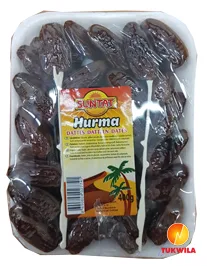
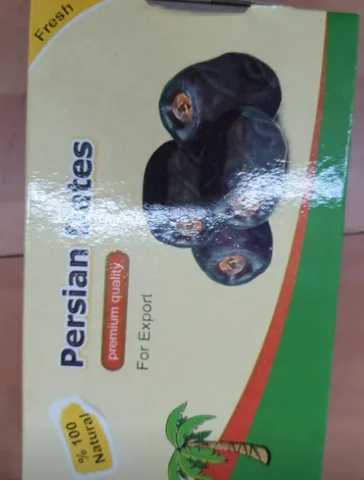
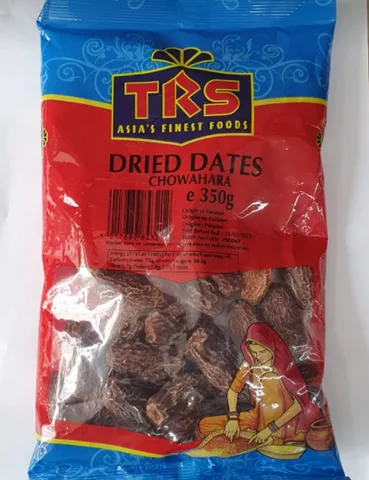
Breaking the fast with dates is a tradition across the Muslim world. It's worth keeping two kinds at home: soft, sweet ones such as Medjool or Iranian dates for the table, and firmer dates for cooking and stuffing. Our dates include Saudi, Dubai, Iranian and Tunisian (Nane) varieties. Alongside, set out a jug of Rooh Afza with cold milk or water, lemon sharbat or Vimto, a Ramadan favourite in many British-Pakistani and Arab households.
Bengali Iftar
In Bangladesh the Iftar plate is a small festival in itself: muri makha (puffed rice tossed with chanachur, chopped onion, green chilli, coriander and a spoonful of mustard oil), chola (spiced chickpeas), piyaju (lentil and onion fritters), beguni (aubergine slices in besan batter), jilapi and, of course, haleem.
Pakistani and North Indian Iftar
Pakoras, samosas, fruit chaat with chaat masala, dahi baray and chana chaat appear on most tables, followed later in the evening by a curry with naan or rice.
Turkish Iftar
Turkish families often begin with dates, olives, cheese and fresh pide, then move on to mercimek çorbası – red lentil soup – and a main course.
Haleem without the stress
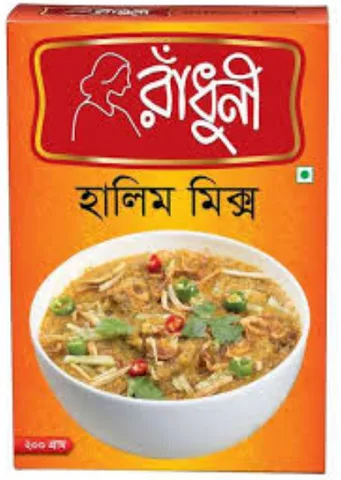
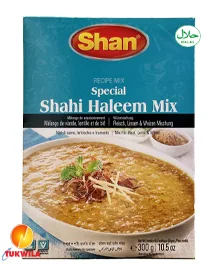
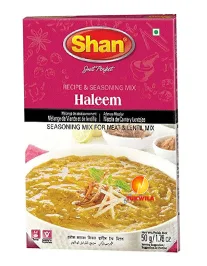
Haleem, a slow-cooked stew of meat, wheat, barley and lentils, is the star of many Ramadan evenings. A haleem mix such as Radhuni Haleem Mix (grains and lentils included) or Shan Shahi Haleem makes it manageable on a weekday. For 6–8 servings you'll typically need one pack of mix, 500 g–1 kg beef or mutton, 2 onions, ginger-garlic paste and oil or ghee. Follow the pack instructions; broadly, you cook the meat with the spices until very tender (1.5–2 hours on the hob or 35–45 minutes in a pressure cooker), cook the grains separately, then simmer both together for 30 minutes and mash until thick. Garnish with fried onions, ginger strips, mint, green chilli and a squeeze of lemon. Haleem freezes well, so make a big batch at the weekend.
Sehri: simple and quick
Sehri happens in the dark, often before 5 am in summer, so nobody wants to cook from scratch. Many families reheat rice and curry from the night before, or eat paratha with egg, yoghurt and dates. Keep frozen parathas in the freezer, cooked rice in the fridge (eat it within a day) and plenty of water to hand.
Shopping list, week by week
- One or two weeks before Ramadan: rice, atta, dal, besan for pakoras and piyaju, chickpeas, dates, Rooh Afza, oil, ghee, spices, haleem mix, frozen parathas and samosas.
- Weeks 1–2: top up fresh vegetables, herbs, green chillies, onions and fruit for chaat.
- Week 3: plan for Eid – semai, nuts, raisins, cardamom, milk powder, sweets and gifts.
- Final week: order fresh sweets and fresh meat, and iron the Eid clothes.
Ordering online? GLS shipping is free from €39.99, and chilled and frozen items such as parathas, samosas and fish travel Monday to Wednesday in an insulated box (cool-box fee €9.99).
Eid ul-Fitr morning: sheer khurma
Eid morning starts with something sweet – sheer khurma in Pakistan and North India, shemai in Bangladesh. Here's a sheer khurma for 6:
- 1 litre whole milk
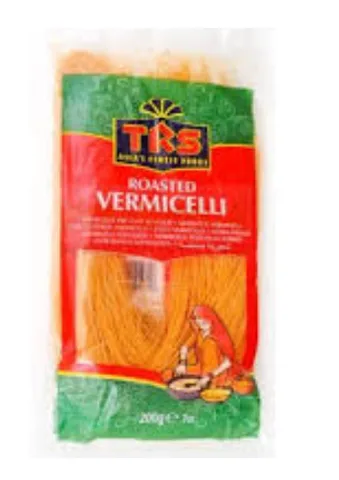
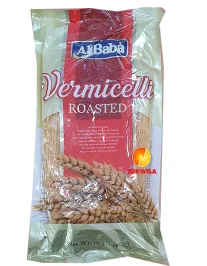
- 60–80 g roasted vermicelli (semai)
- 2 tbsp ghee
- 4 tbsp sugar, more or less to taste
- 4 green cardamom pods, lightly crushed
- 8–10 dates, stoned and chopped
- 2 tbsp each of almonds, pistachios and cashews, chopped; 1 tbsp raisins
- Warm the ghee in a heavy pan, fry the nuts and raisins for 1–2 minutes and set half aside for the garnish.
- Add the vermicelli, broken into short lengths, and stir for 1 minute until fragrant.
- Pour in the milk, add the cardamom and bring to the boil, then simmer on a low heat for 10–15 minutes, stirring often.
- Stir in the sugar and dates and cook for another 5 minutes. Sheer khurma thickens as it cools, so take it off the heat while it's still pourable.
- Serve warm or chilled, topped with the remaining nuts.
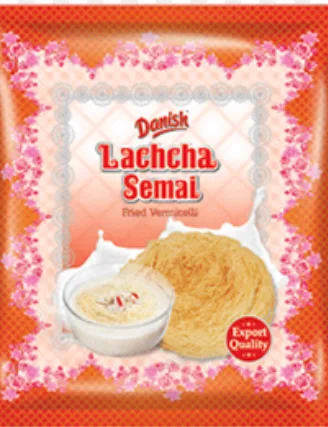
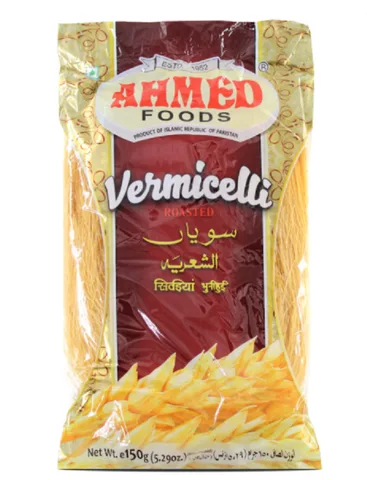
For the dry Bengali version, jorda semai, the vermicelli is cooked with ghee, sugar syrup and cardamom but no milk. You'll find Danish Lascha Semai and other brands under vermicelli and semai.
Sweets for guests
Expect visitors all day. A box of fresh mithai – gulab jamun, kaju katli, laddu, chamcham – plus soan papdi and a pot of chai is the easiest welcome. Fresh sweets are perishable, so keep them in the fridge and plan to finish them within a few days. Order them in good time during the last week of Ramadan. In Bangladesh, biryani on Eid comes with borhani, a spiced yoghurt drink that's quick to make with Radhuni Borhani Mix Masala.
Eid ul-Adha: planning the meat
For Eid ul-Adha many families cook large quantities of goat, lamb or beef – kala bhuna, rezala, nihari or kacchi biryani. Our fresh halal meat is cut to order and ordered by WhatsApp: tell us the cut, the weight and how you'd like it prepared, and send your order early, as the days before Eid are busy. Our shop on Bautzner Straße 16 in Dresden is open Mon–Sat 10:30–20:00.
Frequently asked questions
Which dates are good for Iftar?
Soft, sweet varieties such as Medjool or Iranian dates are popular for the table. Firmer dates are fine for cooking, stuffing or sheer khurma. Many families simply keep both at home so there's something for every taste.
Can I make haleem ahead and freeze it?
Yes, haleem freezes well in portions. Cool it quickly, pack it into tubs and thaw it overnight in the fridge. When reheating, add a splash of water or stock and stir well, as it thickens during storage.
How do I order fresh halal meat for Eid ul-Adha?
At Tukwila, fresh halal meat is ordered by WhatsApp and cut to order, so tell us the cut, the quantity and how you'd like it prepared. The days before Eid ul-Adha are very busy, so it's wise to send your order early.
How long does sheer khurma keep?
About two days in a covered container in the fridge. It thickens as it chills, so stir in a little warm milk before serving. Add the garnish of nuts just before you bring it to the table so they stay crunchy.