What is ghee? A practical guide to clarified butter
Ghee is the golden thread running through Indian, Pakistani and Bengali cooking. It perfumes the tadka on a bowl of dal, keeps chapatis soft and glossy and turns up in almost every kind of mithai. This guide explains what ghee actually is, how it compares with butter and vegetable ghee, how to make your own and how to use a jar of ready-made ghee in everyday dishes, from basmati rice to halwa.
What exactly is ghee?
Ghee is clarified butter. Ordinary butter is a mix of fat, water and milk solids. Heat it slowly and the water bubbles away, the milk solids sink to the bottom of the pan and turn light brown, and what is left is pure butterfat that you strain off. Compared with the plain clarified butter you find in European supermarkets, ghee is cooked for a little longer, until those milk solids are toasted. That extra time gives it a nutty, faintly caramel flavour and the unmistakable smell that hits you when you open a jar.
In Hindi and Urdu it is ghee or ghi, in Bengali ghi, and in Tamil kitchens you will hear nei. They all mean the same golden fat that has been used for festive meals, sweets and religious ceremonies across South Asia for centuries.
Ghee, butter and vegetable ghee compared
- Butter still contains water and milk solids, so it spits and burns quickly in a hot pan.
- Clarified butter (Butterschmalz in German shops) has had its water and solids removed but tastes fairly neutral. It is a decent stand-in if you run out.
- Ghee is clarified and lightly browned, with a deeper, nuttier taste. Because the delicate milk solids are gone, it copes well with high heat.
- Vegetable ghee (vanaspati or banaspati) is a plant-based fat that looks like ghee and is used in some homes for deep-frying and sweets. It is not a dairy product, so read the label if you want real butter ghee.
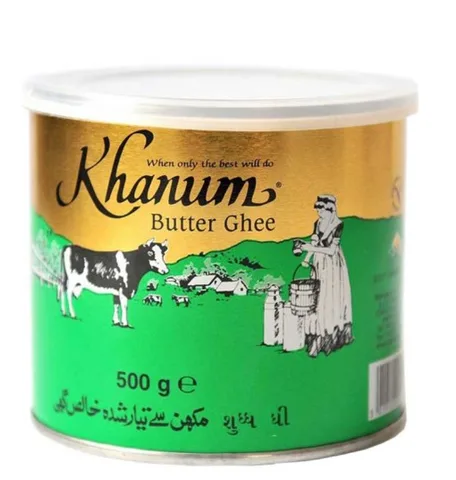
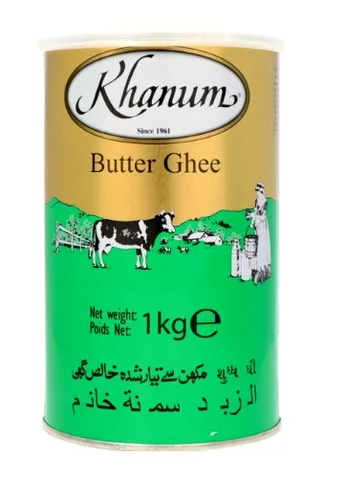
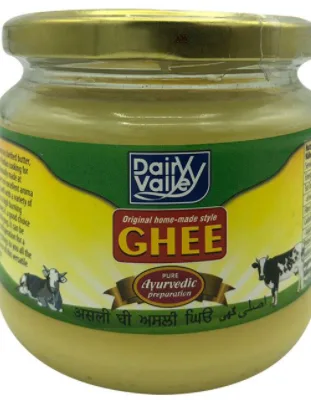
On our shelves you will find Khanum Butter Ghee and Dairy Valley Original Home Made Ghee, plus Aseel Vegetable Butter Ghee if you specifically want a plant-based fat.
How to make ghee at home
Homemade ghee is easy, but it needs your attention for twenty minutes or so. For roughly 400 ml you will need:
- 500 g unsalted butter (sweet cream or cultured both work)
- a heavy-based saucepan
- a fine sieve and a clean muslin cloth or kitchen paper
- a clean, completely dry jar with a lid
- Cut the butter into cubes and melt it over a low to medium heat.
- Once it starts to foam, turn the heat down low. Don't stir; just skim off the froth now and then.
- After 15–25 minutes the fat turns clear and golden, the bubbling quietens and light brown specks gather on the bottom. The kitchen will smell of toasted nuts and toffee.
- Take the pan off the heat straight away, let it settle for a minute or two, then pour the ghee through the lined sieve into the jar.
- Leave it to cool uncovered before putting the lid on. As it cools it sets and turns slightly grainy, which is exactly what it should do.
A trick from Bengali kitchens: drop in a bay leaf or a few curry leaves for the last couple of minutes for a gentle, savoury aroma. And don't throw away the browned milk solids; many families stir them with a little sugar and hand them to the children as a treat.
Common mistakes
- Too much heat: the solids burn black and the ghee tastes bitter. Low and slow wins.
- A damp jar or wet spoon: water in ghee makes it go rancid much sooner.
- Straining too early: if the fat still looks cloudy, there is water left in it. Wait until it is crystal clear.
How to cook with ghee
Tadka and baghar
For a classic tadka, heat 1–2 tablespoons of ghee in a small pan, add 1 teaspoon of cumin seeds, 2 dried red chillies and a sliced clove of garlic, and fry for 30–60 seconds until the garlic is golden. Pour the sizzling mixture straight over a pot of finished dal. Ghee carries the aroma of whole spices beautifully, which is why it is the traditional choice here.
Roti, chapati and paratha
Brush freshly made chapatis from atta flour with a little ghee and they will stay soft in the bread basket. For paratha, you spread ghee over the rolled dough, fold it and roll it again; that is how the flaky layers form.
Rice, pulao and biryani
A teaspoon of ghee in the cooking water, or folded through at the end, makes rice glossy and fragrant. For biryani, drizzle 2–3 tablespoons of melted ghee over the top layer of rice before sealing the pot for the dum stage.
Sweets and festive cooking
Gajar halwa, suji halwa, laddu and sheer khurma all depend on ghee. For a simple suji halwa, toast 100 g of semolina in 80 g of ghee for about 8 minutes, stirring constantly, until it smells biscuity and turns pale gold, then pour in hot sugar syrup. Short on time? Our fresh mithai is available in the Dresden shop and online.
How to store ghee
- At room temperature: a tightly closed jar kept somewhere cool and dark lasts several weeks, up to around two to three months. For shop-bought ghee, go by the date printed on the jar.
- In the fridge: ghee keeps fresh for considerably longer but sets hard, so let it soften at room temperature before use.
- Clean, dry spoons only: crumbs and water are the main reasons ghee spoils.
- Trust your nose: good ghee smells nutty and buttery. If it smells sharp, cheesy or stale, throw it away.
How much ghee do you need?
If you only use it for tadka and roti, a 400–500 g jar lasts surprisingly long. Before Eid, Diwali or a wedding, when the halwa and biryani pots come out, it is worth stocking up. Ghee travels happily with GLS alongside your rice, dal and spices, and orders from €39.99 ship free.
Frequently asked questions
Can I use clarified butter instead of ghee?
Yes. Plain clarified butter works for frying and tadka because it is also free of water and milk solids. It just tastes milder, since the solids are not browned. For sweets and biryani, real ghee gives a noticeably nuttier flavour.
Does ghee need to go in the fridge?
Not necessarily. Sealed and kept cool and dark, ghee lasts weeks to a few months at room temperature. The fridge keeps it fresh for longer, although it sets firm. Above all, always use a clean, dry spoon.
What is vegetable ghee or vanaspati?
Vegetable ghee is a plant-based fat that looks and behaves a bit like ghee but contains no butter. It is often used for deep-frying and baking. If you want dairy ghee, check the ingredients list on the tin or jar.
Why has my homemade ghee turned grainy?
That is completely normal. As butterfat cools slowly it crystallises into small grains, which does not change the taste at all. If you prefer a smoother texture, cool the jar faster, for example by standing it in a bowl of cold water.