

Atta flour for chapati and roti
Atta is the finely milled whole-wheat flour used across India and Pakistan for everyday flatbreads: chapati, roti, phulka, paratha and puri. It's ground between stones in a chakki, which… 11 Products
11 of 11 products
View
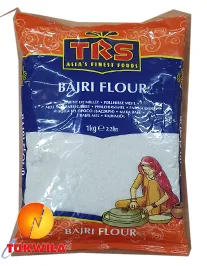
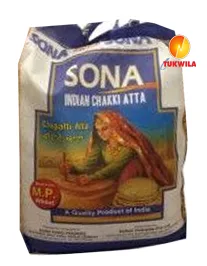
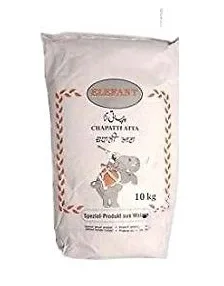
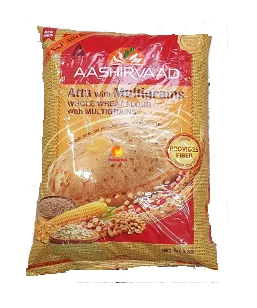
Atta flour for chapati and roti
Atta is the finely milled whole-wheat flour used across India and Pakistan for everyday flatbreads: chapati, roti, phulka, paratha and puri. It's ground between stones in a chakki, which makes it much finer than German Vollkornmehl and lets it absorb more water, so the dough turns soft and pliable and the breads stay tender even when they cool down. Plain Type 405 flour simply doesn't behave the same way.
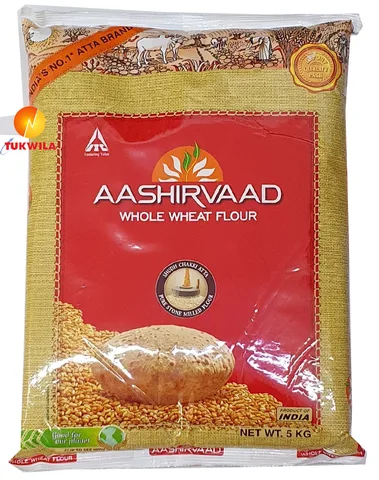
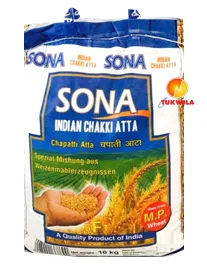
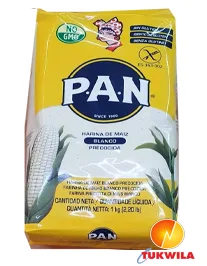
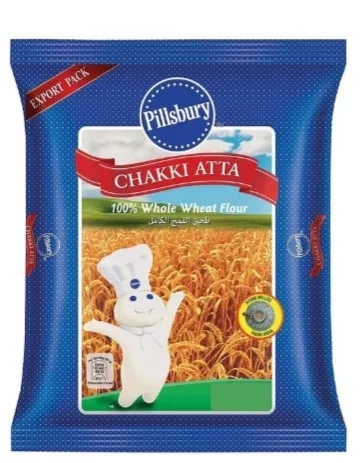
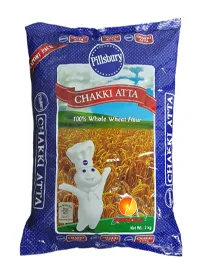
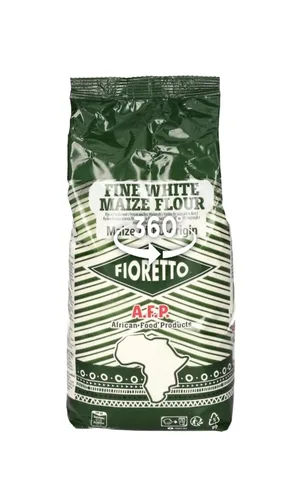
On our shelves you'll find ITC Ashirvaad Chapatti Atta (including a multigrain version), Sona Chapatti Atta, Pillsbury Fresh Chakki Atta and Elephant Atta, in 5 kg and 10 kg sacks. For variety there's ragi, jowar and bajri millet flour, plus white maize meal for makki ki roti. Brush your rotis with ghee, or keep a pack of ready-made chapati and naan in the freezer for busy days.
See every flour in rice and flour.
Getting soft, puffy rotis
Start with roughly 300 g of atta, half a teaspoon of salt and a teaspoon of oil, then add about 200 ml of lukewarm water a little at a time. Knead for 8–10 minutes until the dough is smooth and springs back, cover it and leave it to rest for at least 20 minutes.
- Divide into 10 balls of about 50 g and roll each to 15–18 cm, dusting lightly.
- Cook on a very hot tawa: around 30 seconds on the first side, a minute on the second, then press the edges so it puffs.
- Store atta airtight in a cool cupboard; because it is whole-grain, it tastes freshest used within a few months.
Short on time? Try frozen paratha. For fritters and batters, use gram flour instead.
Frequently asked questions
How is atta different from German wholemeal flour?
Both use the whole wheat grain, but atta is ground much more finely, traditionally in a stone chakki. It soaks up more water and gives an elastic dough that rolls out thin. Chapatis made with ordinary Vollkornmehl tend to crack and turn dry.
What does chakki atta mean?
A chakki is a traditional stone mill. Chakki atta is ground between millstones, which gives a very fine flour with a slightly nutty taste. You'll see the word on packs such as Pillsbury Fresh Chakki Atta and Sona Desi Chakki Atta.
Can I bake bread or cakes with atta?
You can. Atta works well in oven-baked flatbreads, biscuits and rustic cakes. On its own it makes a fairly dense yeast loaf, so mix it roughly half and half with strong white flour if you want a lighter crumb. Chapati and puri need no yeast.
What pack sizes does atta come in?
We mainly stock atta in 5 kg and 10 kg sacks, since most families get through it quickly. Millet flours such as ragi, jowar and bajri come in 1 kg packs. With the big sacks, an airtight storage bin keeps the flour fresh and pest-free.