Choosing a ghee jar for everyday cooking and sweets
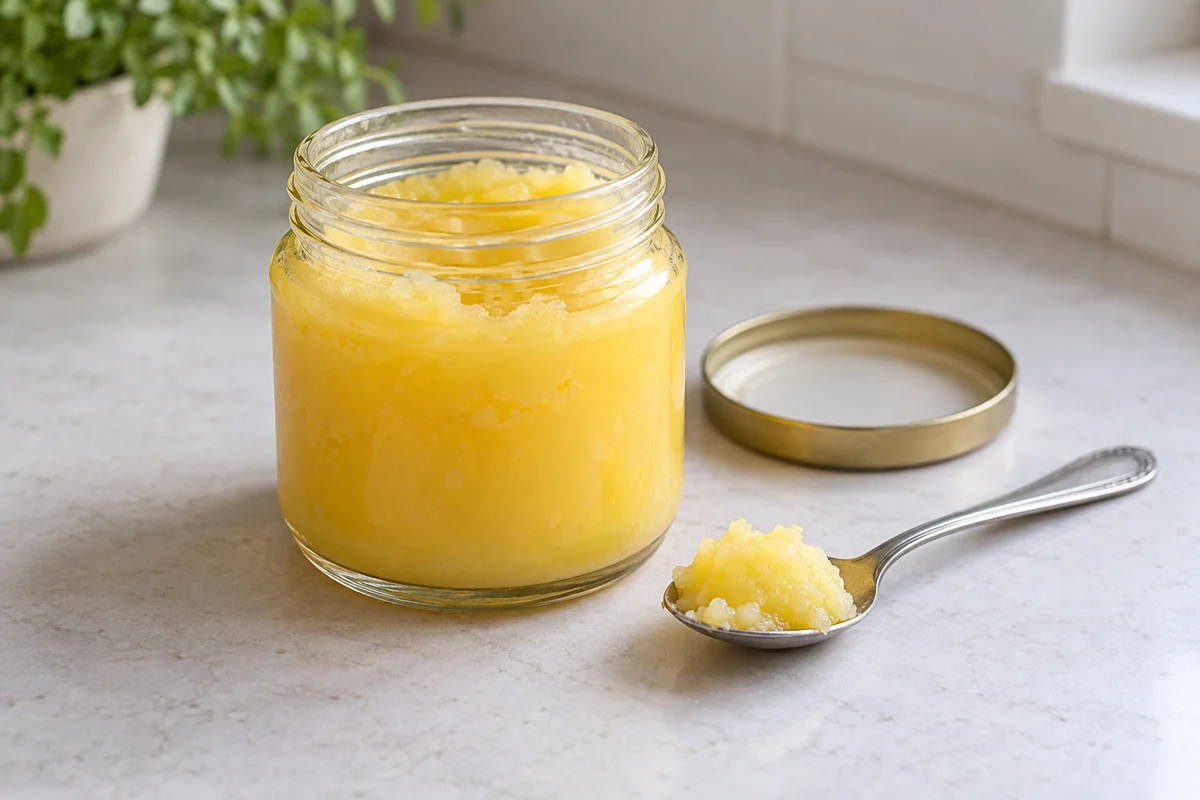
Choose a ghee jar by planned use, labelled ingredients and storage instructions. A larger container is useful only when it fits your cooking and storage routine.
Begin with the dishes you will cook
Ghee is used in different ways: a measured amount in a curry, a finishing spoon in dal or a larger quantity in a sweet. List the next few dishes and their recipe amounts before choosing a container. This is more useful than assuming that the largest tin is the most economical purchase.
Manufacturer ranges can offer several sizes. Compare the actual net contents and kilogram price, then check that the container will fit where the label says it must be stored. Do not use the shipping weight as the amount of ghee in the jar.
Read the ingredient, not just the serving image
Check whether the product is dairy ghee and read the allergen declaration. Ghee should not be presumed suitable for someone with a milk allergy. Do not describe it as vegan or free of an allergen simply because of its appearance or a general article about clarified butter.
If your recipe names ghee, a product sold as vegetable cooking fat is not automatically the same ingredient. Compare the declaration rather than relying on a similar tin or a familiar colour.
Opening changes the planning question
Read after-opening storage and any use period on the exact product you receive. Use a clean, dry utensil and close the container after measuring. Avoid returning food-covered spoons to the main jar. Keep the date and batch information if the container is moved or decanted.
For occasional cooking, a smaller pack can reduce the chance of an opened container sitting unused. For frequent sweets, total the recipe quantities first. Our ghee introduction explains its cooking role; the current ghee selection lets you compare available containers without relying on old prices printed in an article.
Sources and label checks
Frequently asked questions
Should I use shipping weight to compare jars?
No. Use the declared net contents and the corresponding unit price.