Atta vs wheat flour, and how to make soft roti
Tried making chapati with supermarket flour and ended up with stiff, chewy discs? The flour is nearly always the culprit. Atta is finely stone-ground whole-wheat flour, and it behaves very differently from German Type 405. This guide explains why and walks you through a roti recipe that works on any hob. Pick a bag from our atta range, or keep a pack of frozen paratha in the freezer for busy evenings.
What exactly is atta?
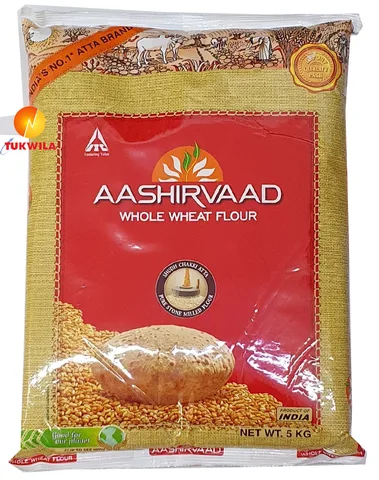
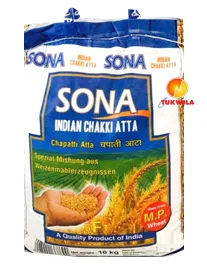
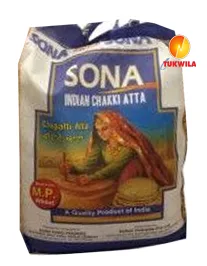
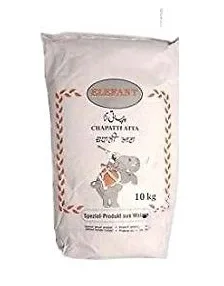
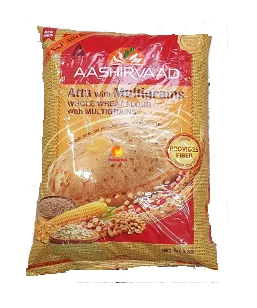
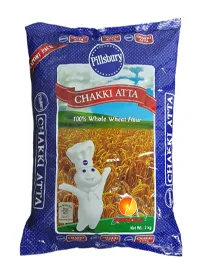
Atta is the everyday flour of India, Pakistan and Bangladesh, the one used for roti, chapati, paratha and puri. It is milled from hard wheat, traditionally in a stone mill called a chakki, and ground very finely. The whole grain stays in – bran, germ and all – but the bran is so fine you hardly notice it. Packs usually say "chakki atta" or "chapatti atta"; on our shelves you'll find Aashirvaad, Sona and Pillsbury, among others.
Atta versus German wheat flour
German flour is sold by type number, which tells you how much of the outer layer of the grain is in the bag:
- Type 405 and 550: white flour. It makes roti that are pale and leathery because the dough can't hold much water.
- Type 1050: darker and a bit closer, but coarser and less stretchy.
- Vollkornmehl (wholemeal): contains the whole grain but is usually coarsely milled, so the dough tears when rolled and the breads won't puff.
Atta is ground so finely that part of the starch gets slightly broken during milling. This "damaged starch" soaks up a lot of water, giving you a soft, supple dough that stays moist – exactly what a roti needs to balloon over the flame and stay soft afterwards. If you are truly stuck, a 50:50 mix of Type 1050 and finely sifted wholemeal will get you through, but it's not the same.
Recipe: 10 soft roti
Ingredients
- 300 g atta, plus extra for dusting
- about 200 ml lukewarm water (180–210 ml depending on the flour)
- ½ tsp salt
- 1 tsp oil or ghee
Making the dough
- Mix the atta and salt in a large bowl. Add the water a little at a time, working it in with your fingers until you have a soft, slightly tacky dough.
- Add the oil and knead for 8–10 minutes. Wet your hand rather than adding more flour if it sticks. It's ready when it is smooth and a fingertip dent springs back slowly.
- Cover and rest for 20–30 minutes. The water spreads evenly through the dough and it becomes much easier to roll.
Rolling and cooking
- Knead briefly again and divide into 10 balls of roughly 50 g.
- Flatten a ball, dip it in atta and roll it to 15–18 cm across. Give it a quarter turn every few strokes and it will stay round and even.
- Heat a tawa or heavy frying pan, dry, over medium-high heat until properly hot.
- Lay the roti on it. After about 30 seconds, when small bubbles appear, flip it.
- Cook the second side for about a minute, until brown spots appear.
- Gas hob: lift the roti with tongs and hold it straight over the flame – it will puff up in seconds. Ceramic or induction: flip back to the first side and press the edges gently with a folded tea towel; it will puff in the pan.
- Brush with a little ghee straight away and stack in a cloth-lined box.
Phulka, chapati, paratha and puri
A phulka is the puffed, fat-free roti described above. Chapati is often slightly larger and finished with a touch of oil in the pan. Paratha is layered: roll the dough thin, brush with ghee, fold it into a triangle or roll it up like a snail (for lachha paratha), roll out again and fry in ghee for 1–2 minutes per side until golden. Aloo paratha is stuffed with spiced potato, green chilli and cumin. Puri uses a slightly stiffer dough rolled into small rounds and deep-fried at about 180 °C, where they puff in 20–30 seconds.
Tawa, pan and rolling pin
A tawa is a flat or slightly domed iron griddle without a rim. It holds plenty of heat and makes flipping easy. A heavy cast-iron or thick stainless-steel pan does the same job, whereas non-stick pans don't enjoy being heated dry this hot. For rolling, a slim wooden belan gives you finer control than a chunky baking pin.
Common problems
- Hard roti: dough too stiff, not rested, or cooked too long on too low a heat. More water, hotter pan, shorter cooking.
- No puffing: uneven rolling or a tear in the dough – or the pan simply wasn't hot enough.
- Dough sticks to the rolling pin: dust with more atta, but don't knead the extra flour in.
- Chewy by the following morning: wrap warm roti in a cloth and then an airtight bag. Reheat on a hot tawa for 10 seconds a side.
Storing dough and flour
Leftover dough keeps in a sealed box in the fridge for a day or two; let it come to room temperature for 15 minutes before rolling. Store the atta itself somewhere cool, dry and airtight – because it contains the germ, it is more delicate than white flour, so buy a bag size you'll get through in a few weeks. Gram flour, rice flour and millet flours sit alongside it in our rice and flour range.
And on nights when kneading is out of the question, ready-made chapati, naan and paratha go from freezer to plate in two minutes – see naan and chapati.
Frequently asked questions
Can I make chapati with Type 405 flour?
You can, but the breads turn out pale and tough because white flour absorbs little water. For soft roti you need finely milled whole-wheat atta. In a pinch, mix Type 1050 with finely sifted wholemeal flour.
How much atta do I need per person?
Allow two or three roti per person, which is 100–150 g of atta. A family of four needs 300–500 g per meal, so a 5 kg bag lasts roughly two to three weeks if you make roti every day.
Why won't my roti puff up?
Usually the pan isn't hot enough, the dough is too stiff or it was rolled unevenly. Rest the dough for 20–30 minutes, roll it evenly thin, and after flipping hold the roti briefly over an open gas flame.
How long does atta keep?
Unopened, go by the date printed on the pack. Once opened, transfer it to an airtight container and keep it cool and dry. Because it contains the wheat germ, it's nicest used within a few weeks.